All Our Practice Tips
Surveys and Law Firms
♫ I got something that will sure ’nuff set your stuff on fire
…
Tell me something good (tell me, tell me, tell me)…♫
Lyrics and music by Stevie Wonder, recorded by Rufus and Chaka Khan,

Lawyers are sensitive souls. No lawyer wants to receive a complaint from a client. However, what you don’t know can, in this case, actually hurt you. The failure to complain by a dissatisfied client may result in the client leaving quietly but then causing maximal damage to the law firm’s reputation by talking to others about their bad experience.
When given a rational choice between hearing from a dissatisfied client 1-1 or having that client go out and speak to many others about their negative experience with a firm or lawyer, virtually everyone would choose to speak to the client and at least try to remedy their feelings. Yet how many lawyers and law firms seek to find those unhappy clients and find out what went wrong before they cause damage? We all know that word of mouth endorsements are worth their weight in gold; similarly negative word of mouth experiences can sink a firm’s reputation.
Yet few lawyers conduct client feedback surveys. According to Joel Rose, a management consultant to law offices:
Information obtained from client surveys may be the most important marketing activity a law firm can undertake. Most firms that initiate client surveys have found their clients to be impressed that the firm cares about their opinions. Also, as the result of surveys, law firms may detect certain misunderstandings which, if not clarified, could fester and result in dissatisfied clients.
There are many ways to conduct a survey. It can be a Word or PDF document mailed or emailed to clients; it can be conducted using an online tool such as SurveyMonkey. It can be a telephone interview with the client by a firm member. It could be done by inviting a small select group of clients one evening to come and talk confidentially with a few of the partners.
The approach used can be reflective of the resources of the firm, the number of clients to be surveyed, the ability of the clients to navigate an online survey, the desire to meet with people face to face and the like. However done, it does have the ability to learn more about how the firm and its services are perceived and more importantly, how you can change to better meet your desired client’s needs.
I once read (unfortunately I can’t find the reference) that there are three essential questions to ask your clients. These are:
- What did we do right?
- What did we do wrong?
- How can we do it better next time?
You can nuance these how you wish but the essence is to find out what clients liked about your services, what didn’t they like and how you can improve on the client experience.
There are many other possible questions such as “How likely is it that you would recommend our services to others?” and “How do you compare the value we provide against other law firms you may have used?” and “How did you find out about our services?”
In terms of general design, I believe a shorter survey is better and more respecting of your client’s time. Many writers state that providing a reward for completing the survey could be useful (but ensure that the cost doesn’t balloon out of control).
However you do it, you are sure to get some very valuable feedback and information. If you can manage it, inviting clients to provide feedback immediately after closing a matter allows you to also repair any possible dissatisfaction before it is too late.
Once you get that information and feedback, the onus then shifts to you to do something with it. Asking clients for feedback and failing to implement change is only going to create an impression that you are going thru the motions without really desiring change.
In fact the survey is an underused tool in most law firms. According to Quantisoft, there are many surveys that law firms can use to identify their strengths, weaknesses and opportunities such as:
- Partner Evaluation Feedback Survey (Associate Attorneys evaluate Partners)
- Associate Attorney Evaluation Feedback Survey (Partners evaluate Associate Attorneys)
- Associate Attorney Development Survey (Associates provide feedback on their career goals and development, and workplace issues)
- Administrative Staff Feedback Surveys (Providing feedback to Administrative Staff)
- Opinion/Engagement/Satisfaction Surveys
- Risk Assessment Surveys
- IT customer satisfaction surveys
- Other surveys designed to meet your Firm’s special needs.
Whether you do surveys of clients or of people internal to the firm, you are sure to learn something that will sure ’nuff set your stuff on fire.
-David J. Bilinsky, Vancouver, BC.
Posted on October 22nd, 2015 - Editor: David Bilinsky

—
Team Up to Improve Cash Flow
Large enterprises typically have entire departments dedicated to maintaining positive cash flow. They employ predictable, set billing cycles, procedures that address accounts receivables, and where appropriate, safeguards to ensure that adequate deposits are on hand to secure pending purchases or services to be delivered.
Small businesses and professional practices generally do not have the resources or the know-how to maintain such discrete departments or to otherwise implement such efficiencies.
Nonetheless, with a bit of planning, organization, and structure, businesses and professional practices of every size can adopt procedures that can generate significant improvement in ongoing cash flow performance.
Here are some thoughts on how to improve cash flow in law practices, many of which may easily be applied to any business or service:
- There are five pillars to maintaining positive cash flow: 1) ensuring adequate retainer deposits are on hand; 2) “doing the work” effectively; 3) accurate, prompt time docketing; 4) regular billing cycles; and 5) scheduled follow-ups on accounts receivables.
- Every member of your team has a role to play in improving cash flow by maximizing performance in each of these areas. Identify each person’s role. Include it in his or her job description. Create accountabilities, monitor and address this vital area at performance review meetings.
- Bill often and bill regularly. Clients can’t pay bills unless they receive them. They also appreciate knowing where they stand, and frequent billing helps avoid unpleasant financial surprises. Pick a date each month that will be your billing date, and if it’s the 30th, make sure bills are done on the 30th.
- Accurate billing requires accurate, up-to-date docketing. The easiest way to get behind in your billing is to get behind in your docketing. Therefore, whether you do your own time recording or have assistance from administrative staff in doing so, ensure that your dockets are up-to-date, each day.
- Ensure that your calendar for “yesterday” is checked, each day, to verify that you haven’t missed recording any phone calls, meetings or other docketable events.
- Make it easy for your clients to pay their bills. That means setting up systems to accept credit card payments, email money transfers, and even online payments. If your firm is lacking any of these facilities, set up a meeting with your bank and learn about your options and associated fees. You will be amazed at the difference when you no longer have to wait for cheques that mysteriously remain “in the mail.”
- It’s still all about effective client service. Develop systems to “make things happen” in your practice. Don’t let files sit. Develop processes that help you complete each stage of your clients’ work as quickly as possible.
- Ensure that there is complete “buy-in” from all members of your team to this approach, and that each member of your team has an understanding of how his or her contributions can make a genuine difference in your efforts to have the kinds of happy clients that make it easy to improve cash flow.
- If you have paid a disbursement for a client, do a “disbursements-only” invoice immediately once the payment has been made.
- Just as invoicing should ideally occur on a specified date each month, so should follow-ups on accounts receivables. Make the 15th your A-R day. When monies are owed, make telephone contact with your clients, and directly ask for payment via credit card, which can be made right then and there via telephone.
- Get adequate retainers when you start a matter, and religiously require retainer replenishment when retainer funds are exhausted. Ensure your retainer agreement specifies this requirement and details when you will be asking your clients for additional retainer deposits.
- Beyond that, be aware of your schedule in the month ahead. Pick a date each month to review whether you have adequate retainers on hand for the events scheduled, and make written requests for replenishment where you do not.
- Don’t bury your head in the sand when you have a problem account. Your retainer agreement should permit you to terminate service in such circumstances. This should not need to happen, however, except in the most extreme circumstances. Before you get to that stage, particularly in legitimate, demonstrated cases of financial hardship, explore whether payment plan options are workable, or whether satisfactory alternate arrangements can be made.
- Where you are acting for an out-of-province or out-of-country client, do not perform services without adequate retainers in advance. Inform your clients from the outset of this requirement, and don’t make exceptions. Collections outside your jurisdiction are an uphill and expensive battle.
Above all, maintain good communication with your clients.
While financial issues can be delicate to discuss, the more direct, candid and approachable you remain, the greater likelihood you have of success in all aspects of your professional dealings, including the financial ones.
Not every example of slow payment results from a client’s financial hardship. If there is an issue with payment, take the time to speak with your client about any service-related concerns that may be at the root of any financial impasse that has emerged.
To state the obvious, happy clients are far more likely to pay their bills promptly than unhappy ones. Listen well, and address any concerns that are raised.
You may be pleasantly surprised at the difference.
– Garry J. Wise, Toronto.
Posted on October 15th, 2015 - Editor: Garry J. Wise
—
We Really Need to Hear From You…
♫ I need to hear from You
Before this night is through
I need to hear from You
So I’m waiting, waiting just to hear from you…♫
Lyrics and music by: Robert Hartman, recorded by Petra.

This week, Garry Wise and I chatted about the possible topics that we could cover in this column over the next while. Without being exhaustive, I pulled together the following list from our discussions. Now it is up to you. In the comments section, please indicate which topic(s) are of greatest interest to you! We really want to hear from you and to write on the topics that you most wish to hear about.
Here is the (incomplete) list of possible topics:
New ways of working:
- Virtual office examples
- Virtual assistants
- Virtual contract lawyers
- Using Skype and other communication methods to reach out
- Portals
- Collaboration tools/applications/websites
- Dragon Dictate and VR on the Mac
- IBM’s Watson and AI: What are the implications?
New Software/web tools:
- Emerging Canadian software
- Apps, Apps Apps!
- Websites: Are they relevant anymore?
- Blogs: Are they relevant anymore?
- Vlogs: Are they the way to go?
- Smartphones
- Tablets
- Sony paper
- Microsoft’s Matter Center
- Why use Twitter? Facebook? LinkedIn? Other SM ?
- Windows 10
- OS X El Capitan
- Do Process Software
Capturing, Organizing and Using Information
- Evernote and OneNote
- Don’t Forget the Milk
- Wunderlist
- IFTTT recipes
- Wikis and law firms
- CanLII Connect
- SurveyMonkey and lawyers/law firms
- MindMapping: The New Way of Legal Thinking?
Security and Privacy
- Portals
- Encryption
- Cryptolocker and other ransomware
- Ethical Hacking?
- How do you handle a security breach?
- Canadian Backup and Storage Services
- Canadian Hosted and Managed Services
Practice Management Software Reviews
- CLIO
- Amicus Attorney
- MyCase
- RocketMatter
- PracticePanther
- HoudiniESQ
- LegalFiles
- PCLaw
- ProLaw
- TimeSolv Legal
- Synergy Legal Suite
Legal Accounting Software and lawyers
- PCLaw
- ESILAW
- Brief Legal Software
- Quickbooks
- Sage50
- XERO
- BillQuick
- CosmoLex
Stages in a Lawyer’s Life
- Entering law school
- Finding Articles
- Life as an Associate
- Life as a junior partner
- Life as a senior partner
- Life as a managing partner
- Life as ‘of counsel’
- Going out on Your own
- Moving Firms
- Finding an Associate
- Office Sharing
- Easing into Retirement
- Moving an Office
- Closing an Office
Using Consultants and Service Providers
- Bookkeepers
- IT providers
- In house IT
- Managed IT services
- Hosted services
- Working with Security professionals
- How to use IT Consultants to Max Advantage
- Apple vs Mac vs Does it Matter Anymore?
- Finding and working with an Office Administrator
Setting up in Practice
- Finding the right location
- Finding the right staff
- Working with staff
- Balancing life and work
- Hiring, firing and managing staff
New Ways of Handling Legal Matters
- ADR
- ODR
- Virtual courts and trials
- Setting up a virtual practice/services
- Taking Technology to Court/Mediations/Arbitrations
- Taking Technology to clients
Other Legal Software
- Optinet Systems
- Emergent Solutions
- Tracument
- Triage Data Solutions
- Dye & Durham
- Thomson Reuters
- Lexis Nexis
- Econveyance
- Esentire
- Worldox
- Primafact
- SAI Systems Auditing
- LexBox
- WordRake
- SimplyFile
Innovative ways of Practising:
- Cognition LLP
- Axess Law
- ABS across the world
New Ways of Thinking about Legal Practice
Whatever we have missed.
Please indicate in the Comments (below) the topic(s) that are most important. Or drop me a line at [email protected]. We hope to hear from you!
Posted on October 8th, 2015 - Editor: David Bilinsky
—
I Don’t Know

They may be the three most difficult words for certain professionals to utter.
The mere temptation to speak them aloud has even been known (among some, it is rumoured), to dredge up sweaty palms, blinding pillars of ego and fortress-thick walls of denial.
I don’t know.
Or if you prefer, I dunno.
Je ne sais pas.
Or or as it is said in ancient legalese, “a comprehensive answer to this most important enquiry is not yet at my immediate fingertips.”
However you phrase it, get used to saying it.
I don’t know.
There are lots of things we are all comfortable not knowing.
What will tomorrow’s weather be? Which leaders should we vote for? Does life as we know it exist elsewhere in the cosmos? Will the Leafs ever host another parade on Bay Street?
We just don’t know. Somehow, we manage to live with that.
And when it involves our professional lives, I’d suggest that comfortably saying those three words is actually in our job descriptions. And at times, our codes of ethics.
This is not something to worry over.
We can’t expect ourselves to know everything on the spot. We can’t possibly be fully up to speed on every section of every statute or every single reported decision that has emerged in the last 24 hours – or 24 years. Our duty of care to our clients surely includes a duty, before providing an opinion, to carefully research and consider all applicable law that will be relevant to whatever riddles we are unraveling.
That will usually take a bit of time, and that is generally not something to be uncomfortable with. Given the ample research and networking tools now available, we can all feel quite confident that good answers will never be very far away.
So, when you don’t know the answer, just say “I don’t know (but I will).”
I would suggest that for new lawyers, in particular, doing so is a survival skill.
Now, I am a realist, and understand that it may a hurdle too high for some to utter those exact three words. In deference to them, I therefore offer my Top Ten* serious ways for lawyers to say “I don’t know” without actually saying “I don’t know:”
- That’s a really good question, and I’d like to take a day or two to review the law before I give you a firm opinion.
- The law has usually been “x” on this, but I’m pretty sure I came across a case recently that went the other way. I will look it up and let you know.
- That’s a very technical question. As a first step, I’d like to consult with a colleague who specializes in this area of the law.
- That question may be one that would be better handled by your accountant. Let’s give her a call to discuss it.
- That question is outside my area of practice. I’d like to arrange a referral for you to speak to a specialist who works regularly in this area.
- That question is likely governed by the [name of statute] Act. Let me look it up and get back to you.
- There’s very good website that addresses this. Can I send you a link?
- That question is now before the Supreme Court of Canada. We won’t really know until the court decides, at some point in the next six months.
- It will be necessary for me to review quite a bit of documentation in order to properly assess this situation. That will take a little time.
- This question is in a gray zone, and I’m not sure if a court has ruled on it recently. Let me see if I can find a case that will give us some guidance on this.
(*to be used only in circumstances where factually applicable)
So that’s today’s tip. You may not know the answer immediately, but you will find it. Just keep your clients in the loop. And take the time you need – to know.
Garry J. Wise, Toronto
Posted on October 1st, 2015 - Editor: Garry J. Wise
—
The Long Tail…
♫ Where you lead, I will follow
Anywhere that you tell me to
If you need, you need me to be with you
I will follow where you lead..♫
Lyrics and music by Toni Stern and Carole King, recorded by Carole King.

Lawyers, I surmise, believe with their long history and experience that they are the innovators of any changes in the legal/justice system. However, that theory may need further examination. In fact it may have to be turned onto its head.
There is a countervailing theory, promoted by Eric von Hippel and others, that users and consumers of services, (in our case, legal services) are actually the innovators of new services rather than suppliers of those services, or in our case, lawyers.
For example:
“User innovation doesn’t only extend to tangible products but also services. von Hippel found that eighty-five percent of individuals self-provided themselves with accounting and banking processes before banks offered this service.”
Imagine. Clients finding and directing the changes that they desire in legal services and providing them to themselves. How could this happen?
“An extension of user innovations is the idea of lead users. These are the individuals who first feel the need for a product or service and create it for themselves. Lead user identification is an essential method used by companies to identify the newest innovations in their product areas giving them crucial insight on the needs of their users.”
How many lawyers and law firms are focused on the idea of lead users and innovation? How many of us are focused on this innovation segment? Indeed how many lawyers and law firms are actually focused on innovation in the delivery of legal services?
Professor von Hipple:
“finds it interesting that in the UK, 8% (3-4 million people) of consumers modify the product that they use.”
In fact,
“He stressed the fact that the number of consumers modifying products and thereby innovating outweighs the number of people doing this in companies”
Perhaps we need to be listening to our clients …much more than we are doing right now. The consumers of legal services may in fact be showing us the innovations that we as lawyers need to make to our delivery of legal services.
In fact, they may just be showing us the way..
Posted on September 24th, 2015 - Editor: David Bilinsky
—
(Random) Tips for September
September has arrived, ushering in a new season, and, after our summer reprieves, the beginning of a new work cycle.
Whether you are a sole practitioner, a new lawyer, or the managing partner at a large firm, September is also an optimal time for big-picture reflection, planning and setting new goals.
On a smaller scale, however, it occurs to me there are a few simple things we can all do that could be as positively impactful on our professional successes (and satisfaction) as the most elaborate of strategic plans.
In that vein, here are my tips for September:
- Help make your office as relaxed and happy as possible. Creating an environment that you and others in your firm look forward to being at will always be a winning strategy.
- Do it early. Deadlines are rarely a surprise or suddenly imposed. Trying planning your schedule to leave real breathing space so that tasks can be completed early, not at the last minute.
- Don’t let that file sit. One of my first mentors put it this way: “There will always be files you avoid, for good reasons or bad. If you let them fester, those files will eventually bite you back. The solution is easy – just do something. Make a call, write a letter, send a memo or schedule an appointment, but just do something on the file.” It is that easy to change momentum
- Less is more, especially in pleadings and argument. Strive for economy in your use of language. People – including judges – will probably appreciate it. And as an added bonus, you will likely become more effective.
- Establish a system. Have a look at your most frequent, typical tasks, and figure out ways to streamline them. Try to organize templates, limit unnecessary steps, and generally, standardize where possible. This will save time, eliminate guesswork, and reduce the potential for errors and omissions.
- Take a walk. Build break time into your daily schedule, and try to keep those breaks as work-free as is possible.
- Say thank you. There are a lot of people contributing to your professional successes. Once in a while, let them know you appreciate them. They will appreciate you back.
- Listen to an expert. It’s impossible for any of us to know as much as we would like to know about every thing. You will always have questions about practice-building and technical and factual issues in your files. You may not know the answers, but someone will. Make it part of your job description to locate and connect with those “someones.”
- Delegate. The MBAs of the world are right on this.
- Participate. The CBA and law societies, among others, are almost constantly seeking input from the profession on any number of current topics. Get involved. Let your voice be heard. It will make your job more rewarding and more fun, and you will meet lots of great people in the process.
- (Bonus tip) Vape, don’t smoke.
Enjoy our new season. And to those who celebrated this past week, Shana Tova – a happy and healthy new year from all the Slaw Tippers to you and yours.
Garry J . Wise, Toronto
Posted on September 17th, 2015 - Editor: Garry J. Wise
—
How Long Should You Wait to Return a Phone Call?
♫ One ringy-dingy…two ringy-dingies…♫
Ernestine/Miss Tomlin (Lily Tomlin on Rowan and Martin’s Laugh-in).
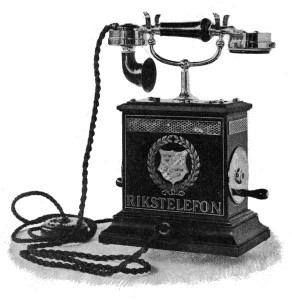
How long should you wait before you return a telephone call? According to Debra J. Schmidt, Loyalty Leader:
“Returning phone calls used to be a common courtesy. Now, busy people claim they don’t have the time. I don’t buy that excuse. I’ve found that the most successful, busy people I know are the ones I can rely on to return my call the same day. It’s a matter of setting priorities.”
Indeed! What could be more important that meeting the expectations of those clients that have already sought your services and who are anxious to hear from you? These are precisely the people who have placed faith and trust in you in meeting their needs and solving their legal problems. What kind of message are you sending them if you fail to return their phone calls promptly?
Susan Dooley of the Dale Carnegie organization states that no response is a response. In fact, in failing to return a phone call promptly, rather than assuming you are busy with assembling the information to return their call (or you are on vacation) the caller may assume something quite different:
[T]here’s a risk that the person feeling “snubbed” by the offender may draw a completely different, and inaccurate, conclusion, such as:
- This is not a top priority to you
- You’re not a professional
- You’re a procrastinator
- You don’t have the answer
- I’m not important to you
- You’re disorganized
- You can’t be counted on
- You’re hiding
- You have bad news, but are not strong enough to communicate it to me
Yikes! No professional would want to be labeled with these character attributes. Unfortunately, the wrong interpretation by the right person can harm business relationships and even careers.
No one would intentionally send these messages to their clients that are noted above. Yet by failing to return phone calls promptly, we are unintentionally sending these very negative messages…about ourselves and how responsible we are to our clients.
So what to do? There are a number of very good suggestions in these situations:
- The first thing is to recover your credibility. Acknowledge that the trust someone has placed in you has taken a hit. Your words and your actions have failed to align. It is easy to lose credibility and hard to regain it afterwards. You made an explicit or implicit promise to your clients to care about their matter. Failing to return their phone call has broken that promise. Start by apologizing. This is NOT an excuse. Don’t say: “I am sorry, but….” As soon as you say that word ‘but’ you have demolished any shred of credibility you had. Understand that you need to take ownership of the fact that you have disappointed your client and be real and honest to them. They are owed at least that much.
- Try to stop this from occurring in the first place by setting exceptions at the outset. If you are away from the office, on vacation, in court or on a personal matter, let your voice mail message shape the expectation of the caller as to when they can expect a call. If you have gone on an 180 day world tour, having your voice mail message state “Hi this is John Smith, I can’t take your call right now please leave a message” is completely different from “Hi this is John Smith. I am out of the office until March 2016. Please contact Jane Doe at extension 123 to discuss your matter or have this call answered by someone else at this office.”
- Ask yourself: “What kind of message do I want to leave with those who want to reach me?” If the answer to that is one of caring and commitment to their concerns, then you will implement policies such as having your assistant check your voice mail daily for messages and return your calls, if only to communicate that you are in trial and perhaps they could speak to someone else in your absence.
- Don’t wait to communicate bad news. Failing to contact people promptly when things don’t go as expected sends a very powerful message – along the lines that you are weak and don’t wish to face unpleasant facts and situations. Especially when things don’t go as expected is when clients will be looking to you as their source of strength to weather the setbacks. If you fail them now, you will fail them in the long term. Be their oak that stands up to the storm and let them know…in fair weather or foul ..that you will be there for them and be their source of strength.
Above all, when that telephone rings…land line or mobile…recognize that you have a golden opportunity. You can build your reputation and your client trust or destroy it, one ringy-dingy at a time.
-David J. Bilinsky, Vancouver BC.
Posted on September 3rd, 2015 - Editor: David Bilinsky
—
Health Care Practitioners: Please Don’t Keep Notes About Your Patients’ Discussions With Their Lawyers
Today’s tip is for health care practitioners whose patients are involved in litigation.
We recognize that it might be natural, and even good practice, for medical practitioners to ask their patients how their lawsuits are going.
Particularly for those practitioners who provide counselling, these discussions may be essential to your work.
Lawsuits can weigh heavily upon the psyches of those who find themselves involved in the legal system. The litigation itself can be very foreign and stressful. The future may in a very real way hinge on the outcome of their lawsuits. There may even be stressful issues between your patients and their lawyers. All of these issues can benefit from being talked through with a qualified health care practitioner.
It can be highly problematic, however, when practitioners include details of those discussions in their chart notes.
No I’m not talking about broad information about the patient’s litigation, here. I’m talking about specific nitty-gritty details of discussions with lawyers that are disclosed by your patients that shouldn’t ever find their way into a medical chart.
By that, I mean details about offers to settle, the patient’s financial expectations and the lawyer’s stated opinions about the value of a claim. Details about tactics and strategies. Information that no patient would reasonably want an adverse party to know.
Practitioners should be aware their their entire charts may at some point be producible in their patients’ litigation. If their chart notes include details of patient’ reports as to confidential discussions with their lawyers, those too may have to be disclosed. Solicitor client privilege could thereby be breached, and your patient’s legal interests could be compromised or prejudiced.
In keeping chart notes then, practitioners should exercise caution and prudence as to the details to be included. If a practitioner intends to include precise details in medical records, they should take care to ensure the patient is aware that such notes will be taken, and that informed consent is obtained.
But most importantly, practitioners should exercise caution and discretion.
Don’t unwittingly cause a harmful breach of solicitor-client privilege by charting details about litigation (and patients’ discussions with their lawyers) that have no genuine medical relevance.
Garry J. Wise, Toronto
Posted on August 20th, 2015 - Editor: Garry J. Wise
—
How to Avoid a Dead Cell Phone When Travelling
♫ Cell phone’s dead
Lost in the desert
One by one…♫
Lyrics and music by Beck Hensen.

[Image courtesy of holohololand at FreeDigitalPhotos.net]
Having just returned from a long tenting camping vacation where my Blackberry was dead for most of the trip, I thought I would pass along some tips on how to avoid the kind of experience that I just went through.
Notwithstanding that we were travelling with both an iPhone and a Blackberry and charging them equally in the vehicle when on the road (courtesy of having USB connectors that allowed us to use the 12 volt ports and plug in the phones to charge while the vehicle was running), the iPhone would have a charge of about 90-95% the next day and the Blackberry would be dead.
Furthermore, the Blackberry kept on stating that it has exceeded its data limit plan (we were in the States for the most part and had data plans that had to be continually renewed) even when it was only ‘alive’ for 1 out of every 3 days (due to the fact that it would only be charged every 3 days due to our travel/camping schedule).
What I found out on my return was that there was a big software update from Blackberry that it kept on trying to download when on the road. If there was a notification of this, I have to say that I didn’t see it. As a result the attempted download ate up the data limit on the plan and also ate up the battery life as well.
So here is a collection of tips to hopefully avoid some of the problems encountered when travelling with a cell phone:
- Get a data roving plan before you leave. It is much better than getting hit with the pay-as-you-go rate in whatever jurisdiction you find yourself.
- Use WIFI whenever possible and turn off the data on your phone. Starbucks is my best friend on the road. For the price of a coffee you can connect to their Wifi network and check your email messages. If you are lucky you can find a table with a power connection too and top up your battery charge.
- If you can, use an unlocked phone or a small tablet that can accommodate a SIM card and purchase a SIM card in the jurisdiction of travel to cut down on your data costs.
- Consider buying a disposable phone in the jurisdiction where you are going. Often these are much cheaper than a roaming plan using a Canadian phone. Furthermore, Canadian cell phones may not work in other jurisdictions.
- Check to ensure that all software updates are installed BEFORE you leave. Or if you find out there is one released while you are travelling, find a WIFI hotspot and do the update there, if possible.
- Make sure you can charge your device wherever you may be. You may need extra plugs and adapters to accommodate the AC power in foreign jurisdictions. See a travel store before you leave.
- Get the apps, music and entertainment files you need before you leave.
- Take photos of your passport, important documents, serial numbers etc and put them in the cloud where you can get at them in the event your device and such are stolen or lost.
- Set up one HTML based email service with an easy to remember password that you can use in the event of an emergency, such as losing your device.
- GPS applications are wonderful when travelling, but remember that they also eat up data at a horrendous rate (at least in my experience).
I hope this helps ease some of the pain when travelling. You don’t want to end up in the middle of the desert with your cell phone dead!
-David J. Bilinsky, Vancouver, BC.
Posted on August 13th, 2015 - Editor: David Bilinsky
—
Windows 10? Whatever…
Windows 10? Yawn.
If nothing else, the imminent launch of the new Windows OS gives us opportunity again to wonder why the Powers-That-Be at Microsoft continue to fail to grasp the obvious:
In terms of user interface, they got it right – with Windows XP. Its been mostly downhill from there.
XP set the gold standard for user satisfaction. That seminal OS would probably still have many millions of added, happy home and office users if the company hadn’t eliminated support for it a bit more than a year ago.
At its front-end, Windows 7 represented fairly lateral change from its predecessors, but Windows 8 and 8.1 were functional and marketing disasters. For many, the inevitable, reluctant change to Windows 8 came only with new computer purchases, and was followed by an equally inevitable scramble to find add-ons, including start menu hacks, that made Windows 8 function mostly like Windows 7 and XP.
While I am sure there have been many improvements along the way in the back end of these post-XP operating systems, from a strictly function-based analysis, I can’t think of a single thing I do on my Windows 8 computers that I couldn’t do on my Windows XP computers – or mostly, for that matter, on my Windows 95 computers that came before.
I’m hardly a casual computer user. It says a lot, then, that these fancy new operating systems mean so little in terms of the quality of my digital life.
So now, Windows 10 is about to arrive, a free download for many, and like most (I suspect), I will eventually make the change out of curiosity, if nothing else.
I fully expect that I will continue to ignore whatever this version does with its “Metro” apps, as I do on Windows 8.1. If there are additional, unpleasant quirks in 10 that fundamentally change my desktop experience, I will find workarounds to allow me continue to work in the comfort of an XP-like environment that’s as familiar as possible.
It was never broke, and now they are fixing it again, down at Microsoft.
For my part, I do not want my Windows experience to be like my iPad experience. I typically use my desktop and laptop for heavy lifting – concentrated and extensive law-related and creative tasks.
In my view, the iPhone and iPad are adequate or better for just about everything else – emails, documents, web-surfing, and social media, included.
I don’t want a dumbed-down environment for laptops and desktops that tries to emulate the simplicity of a tablet. The desktop and laptop cannot survive as products by trying to be as tablet-like as possible. Windows products are still genuinely better for certain things. Its complexity makes it so.
Microsoft would be well advised to pay closer attention to why and when people actively choose to use their Windows-based computers, rather than reaching for their readily accessible phones and tablets. If only Microsoft would just make it easier for users to do those things, and forget about the bells and whistles so few actually use…
Not gonna happen. I know.
So change and Windows 10 are now upon us.
We will adjust. Most of us will take whatever steps are necessary to make Windows 10 feel like Windows 7 or XP, and life will go on until Microsoft finally gets it – or Windows products become truly obsolete (whichever comes first).
Rant complete.
– Garry J. Wise, Toronto (@wiselaw on Twitter)
Posted on July 30th, 2015 - Editor: Garry J. Wise
—