







All Our Tips
Reopen a Just Closed Browser Window Tab With Ctrl+Shift+T

Every so often you will accidently close a browser window tab that you wanted to keep open. Hate when that happens!
And after doing so, you want to get it back. Typically, most of us will open Google Search in a new tab and try to reconstruct the search terms that got us to the tab in the first place. Sometimes you might open a new tab and go into your browsing history. And while doing either these things will probably get you back, there is a must easier and faster way to get that tab back.
Pressing Ctrl+Shift+T instantly and magically opens the most recently closed tab on exactly the same page on most Windows browsers. Cmd+Shift+T does the same thing in Chrome on a Mac and on Safari use Cmd+Z.

A Beginner's Guide to Producing Law Firm Videos – Part 1

 This edition of Practice Tips is inspired by last week’s launch of LegalTube.ca, a new online portal showcasing videos by Canadian lawyers on a wide range of law-related topics and practice areas.
Is it time to release your own law firm’s inner Cecil B. DeMille?
Or more directly, should your firm be creating online video content as an educational and marketing tool? An October 2013 Globe and Mail article by Lisa Ostrikoff makes a strong business case for doing so:
The Content Marketing Institute’s 2013 Benchmarks, Budgets, and Trends report shows the majority of North American small businesses and big brands are focusing on video as a critical content marketing element. Enterprise marketers use it more than any other approach, with 71 per cent of small businesses incorporating it into their strategies
Fuelling the fire of the online video content marketing revolution is the increasing use of mobile. A recent Invodo study discovered mobile consumers are three times more likely to view videos than laptop or desktop users. Simply put, videos are quicker and easier to digest than text-heavy content. Video also enables your brand’s content to stand out from the online clutter. The data backs this theory up: ROI Research reports users interact with content that incorporates video at twice the rate of other forms of content.
What does this mean for your business? Video content marketing is all about creating a memorable visual representation of your brand. For it to be most effective, you need to learn how to use this storytelling medium effectively and incorporate it into your content strategy, much as you would with blogs or articles. While not all video needs to be heavily produced, it does need to be polished to a level at which it aligns with your brand and its messaging.
As daunting as it may seem at first, the technological revolution has blessed us with many tools to self-produce and broadcast law-related video at minimal cost.
High-definition video cameras that connect via USB to your laptop or computer are readily available in the $100.00 range. Free video-editing software, like , can be used to snip superfluous raw footage and take your video to completion with the addition of digital zooms, effects, titles and credits.
For the DIYer in a hurry, most smartphones and tablets are equipped with high-quality cameras that allow your firm’s video-selfies to be created and published to YouTube or Facebook in mere minutes.
And of course, numerous options exist to have your firm’s video offerings professionally produced. Google “legal marketing video production canada” for some of the contenders.
However you choose to get there, consider adding video content to your firm’s website and blog. Your audience awaits.
In subsequent posts in this series, we’ll have some tips on:
- choosing topics for your firm’s videos
- production do’s and don’ts
- on-camera presentation hints
- editing techniques, and
- publishing and promoting your law firm videos.
See you at the movies.
– Garry J. Wise, Toronto (@wiselaw on Twitter)
Wasted Legal Research

Today’s Tip was inspired by the CBA Futures Report at page 22
I have a circle on a page, and within that circle I have the word client. Around that circle are five other circles. One says,‘Is that legal task necessary, or is it waste?’ One says, ‘Is the person performing that legal task the most cost-effective resource?’ Another says, ‘Is the process transparent to the client? Do they know what is being done, why it is being done, and who is doing it? The next one says, ‘Does the process use checklists, templates and technology to help save time and costs?’ And the last one says, ‘Does the process incorporate reporting and communication styles that meet the client’s needs?’”CBA Futures Report 2014, page 22.
The above is part of a quote from Patricia Olah of BLG and is found under the heading Inovation in Action: Business Processes.
Legal Research is a business process. Does your process have any waste?
Easily Tweak Windows Settings With the God Mode Folder
Most of you will be used to going into the Control Panel to tweak or change your Windows settings. In the Control Panel, related types of settings are grouped under different icons to help you find the setting you are looking for. But finding a particular setting can sometimes be a challenge as you need to dig down two or more levels to get to the appropriate dialog box.
There is another way to easily access and change Windows settings: “God Mode” gives you single list of every single Windows setting that you can configure (assuming your IS department hasn’t locked them down).
To give yourself access to God Mode, you need to create a new folder with this exact name (copy and paste the text within the double quotes): “God Mode.{ED7BA470-8E54-465E-825C-99712043E01C}”. The icon for this new folder will look like a small computer screen.
To enter God Mode, click on this folder to  open it in the same way you would open a regular folder. When it opens you will see 293 settings listed by category. Clicking on any one of the listed items will take you to the dialog box for changing that setting. Take a look at the list – I am reasonably sure most of you will find settings that you didn’t know about. But be careful, changing some of the settings listed in God Mode may render your computer inoperable.
Lawyers and Pricing – Part 2
♫ Keep moving, never stopping sharks
Keep moving…♫
Music, lyrics and recorded by Further Seems Forever.

In the first column in this series we dealt with the issue that price is but one part of the 7 components of the legal marketing mix. Unfortunately many lawyers (and clients) tend to overly focus on price and not appreciate the other 6. The theme of this post will be to look at the product mix and the role that it plays in marketing (and pricing!) of legal services.
One law firm is different from another in terms of the mix of services that they can provide. My colleague and friend Bob Denney produces a “What’s Hot and What’s Not” report several times a year that I repost on my blog Thoughtfullaw.com with his kind permission. This report shows what services are in demand, what are staying neutral and which are declining. The importance here is that if you can be nimble, you can change your mix of legal services. Staying with the same mix of services can result in stagnation. In fact, Woody Allen in one of his movies once said:
“A relationship, I think, is like a shark, you know? It has to move constantly move forward or it dies. And I think what we got on our hands is a dead shark”
The one thing that you don’t want to be as a law firm is a dead shark.
So survey your clients – do external reviews of what services are in demand, look at what industries are on the upswing in your area and think about how you can provide needed legal services to them. Compare your marketing mix of services to your competitors and see how you stack up. Eventually what you are doing will grow old in the eyes of the consumer – you need to change things up – complacency is the enemy of success.
If you can offer a unique mix of services that are more closely aligned to the needs of your clients, then you have moved from competing solely on price to being able to distinguish your services from those offered by the competition and show to the clients that you are doing a better job in terms of meeting their needs than the competition. The clients could say “Yes we could move to Dewey Gottem & Howe, but they don’t do what Werk, Worke and Wourke do for us…” You have moved from competing on price to competing based on the perceived value of your services from the viewpoint of the client. You have become a moving, never stopping shark…
David J. Bilinsky, Vancouver, BC.
Next Sources and Research Habits
It is an excellent time to be involved in the legal information profession. Rapid changes in legal publishing, legal informtion technologies, web functionality and the accessibility of information make legal research an interesting and exciting challenge.
Yesterday, I told some law school students that I take advantage of vendor offered training sessions regularly. One of the reasons for this is that there are so many improvements, tweaks, and enhancements that are made to each and every legal research tool that it is very easy to get into habits that may limit the usefulness of your gathering task. Another reason is that content moves around.
A fine, and long awaited, example of this is the Canada Law Book Spectrum products migration to the WestlawNext Canada platform. To see what products like Labour Spectrum look like in their new environment visit the WestlawNext Canada home page and hover over the Products menu item for options.
Handy Windows and Mac Keyboard Shortcuts for Deleting a Whole Word
When it comes to deleting text we have just typed, most of us will hit the Backspace (PC) or Delete (Mac) key.
This works, but deleting text one letter at a time is not the most efficient way to correct  your mistakes.
Deleting an entire word instead of deleting a single letter is much faster. You can use the Ctrl+Backspace (PC) or Option+Delete keyboard shortcuts to delete the entire word behind the cursor. Remember these shortcuts for faster editing next time you are composing something on your computer.
Lawyers and Pricing – Part 1
♫ Zoom Zoom Zoom ♫
A Capoeira song performed by Jibril Serapis Bey.

When it comes to legal services, it seems that many law firms see price as the sole basis for competition. However from a marketing perspective, price is but one of seven criteria that make up the ‘marketing mix’ for services. Since legal services are ‘intangible economic goods’ lawyers have to sell the perceived benefits of their services and see how they match up against the needs of the clients. All other things being equal, clients evaluate services on price. But this assumes that you are delivering commodity-like services that are largely indistinguishable from those offered by the competition.
If you can distinguish your services from the competition and come closer to meeting the discerned needs of the client as compared to the competition, you are now engaged in a differentiation marketing strategy. This is based on Michael Porter’s work at Harvard Business School.

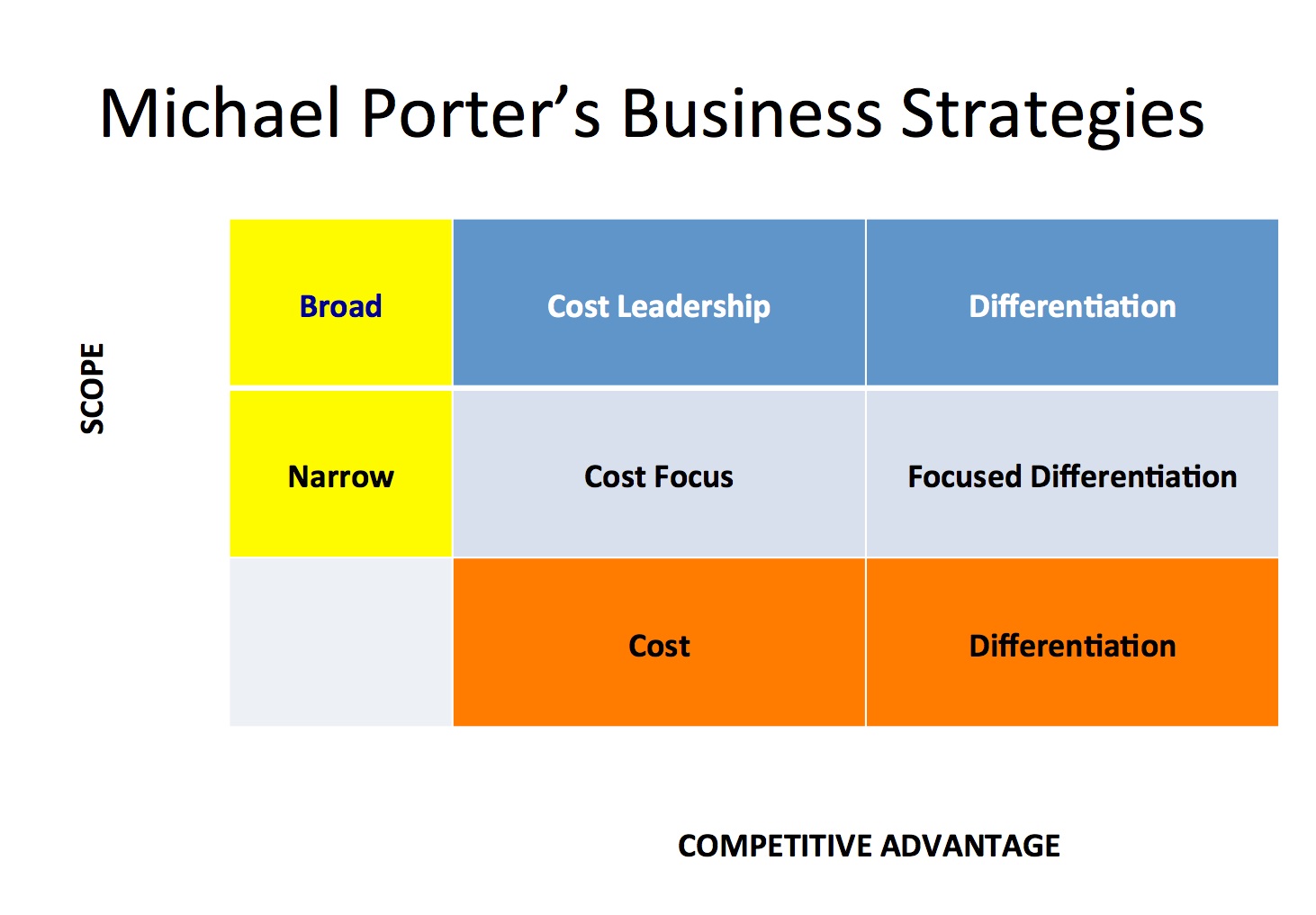
From this matrix, you can see that there are two major determinants of how you market your practice. The first is whether you appeal to a large target market or a smaller one. The second criteria is whether you choose to compete on price or on differentiating or distinguishing your services from the competition. The focused differentiation strategy seeks to market niche legal services to a target market. There is another factor at work here. Distinguishable legal services have a higher margin as compared to cost-focused strategies.
As you start to think about how to distinguish your services from those of the competition you move from thinking about the ‘reference value’ of your services (your price compared to the price of competing services) to the ‘differentiated value’ of your services (how the quality and method of delivery of your services compare to the competition).
When you start thinking of how this is done in other markets, for example in the automobile market, you see that autos can take you (and others) and transport them to new locations – that is their function and on this level they are commodities. Every auto sold does this. What distinguishes one auto to another can be neatly summed up in the phrase used by Mazda: “Zoom Zoom”….
In subsequent columns we will explore each of the 7 components in the service marketing mix and what they mean for lawyers.
–David J. Bilinsky, Vancouver, BC.
Start the Year Off Right
♫ All of these lines across my face
Tell you the story of who I am
So many stories of where I’ve been
And how I got to where I am
But these stories don’t mean anything
When you’ve got no one to tell them to
It’s true… I was made for you
Oh yeah, well it’s true… that
I was made for you…♫
Lyrics and music by Phillip John Hanseroth, recorded by Brandi Carlile.

The beginning of September is always the start of the new year for me. Perhaps it was so many years spent in school and the inevitable association with the start of the newly-minted school year. Perhaps it is coming back from a summer vacation refreshed and invigorated and with new energy for projects. Perhaps it is because I have been talking to many people who have plans for when they get back in September in terms of branding and setting a new strong strategic direction for their firm.
Either way, I believe that September is a wonderful time to refocus, regroup and decide the future direction of your practice. What changes would you like to see? Over time law firms can lose their focus on their core services – what do they do best. They can also lose touch with their core values and their strategic direction as they take on new files and clients that pull them in new directions. September is a perfect time to sit back with your colleagues and think about where the firm is going. Do you wish it to explore new opportunities? Or are you being pulled into areas that no longer represent the reasons you formed the firm in the first place? What is gnawing on you about the firm? What would you like to change from both a firm-wide and personal perspective? Start a list..and have your colleagues do the same – and arrange a time (on a weekend) to hone in on all this and come to a consensus on where all of you would like to go.
Come together and discuss the firm..its direction, focus, what makes it special and distinct – and what should be the future direction of the firm. What is your story? Have you been drawn away from the clients, activities and associations that drew all of you together in the first place? What is your marketing focus for the next while? What would you like to change regarding the management of the firm? What about technology? Have you fallen a bit behind in this area and need to incorporate plans for upgrades and new ways of doing things? Are there categories in the finance area that you would like to tighten up, such as the collection of old accounts receivable and the tightening up of credit extended to clients? How about looking at your budget and seeing if the expenses in the group “we have always been paying this” should be looked at again if for no other reason to see if there are other vendors who might be less-expensive?
Personally I think one of the important measures is whether you have remained a ‘client-focused firm’. My late colleague and friend Milt Zwicker’s acid test was whether what was done in the firm provided value to the clients – or not. If not he would change or modify the policy or procedure so that it benefitted clients as much as possible.
I think focusing on the story of the firm and how it carries you into the future is also important. This is the culture, the invisible bond that draws all of you together and forms the backbone of the belief system of the firm. Organizations can change their culture and focus, but the story is the glue that connects the past with the future and tells why you are where you are. It is important to connect with the story of the firm, since after all, the firm was made for you to be able to provide value and meaning to your clients.
-David J. Bilinsky, Vancouver, BC.
Stay Current
Today’s Tip was inspired by an email exchange with Anne Bowers of the Northumberland County Law Association Library. Anne and I were discussing how we stay current on trends that affect us as law librarians. As we chatted about our personal current awareness activities, I realized that many lawyers rely on the librarians in their circles to help them stay current.
Consider your options for engaging with librarians for current awareness activities. If you have an ‘in house’ library team, let them help you with:
- monitoring websites
- helping you choose relevant RSS feeds to subscribe to (and showing you how to use RSS)
- media clipping and web gathering
- legislation monitoring
- forwarding publishers blurbs of substantive or update material
- copying you on one off material that they know you are interested in based on your last research request
If you don’t have law librarians inside your organization, look to your courthouse library, law association library, law society library, etc. Many of these have blogs that will help you stay current.
Have another idea or method to stay current? Add a comment.


