







All Our Tips
Critical Characteristic 3 – Engagement

For the last 3 legal research tips of 2014 I have decided to give my opinion of the 3 most critical personal characteristics for being a successful legal researcher. I think the third most important personal characteristic is engagement.
Being engaged means that you are involved in an activity, committed, interested, embedded, in gear, active, diligent. You are fully focused on the task at hand.
If you are not engaged in a legal research problem, it will be difficult to harness the creativity that is necessary to see potential paths to an answer. It will also be difficult to maintain your course on a known path to an answer. Let’s face it, there is a huge amount of information that can be detrimentally distracting if you are not engaged on finding an (or the) answer to the question you are working on.
I think engagement is a critical personal characteristic for legal research.
Next week – characteristic #2

Craft Your Future One Hour at a Time

♫ Inch by inch, row by row, I’m gonna make this garden grow
All it takes is a rake and a hoe and a piece of fertile ground…♫
Lyrics and music by: David Mallett, recorded by: Peter, Paul & Mary.

Abraham Lincoln is credited with saying: “The best way to predict your future is to create it”
Brian Tracy in his blog talks about the Golden Hour – a time that you set aside at the start of your day to work on the most important task you will have for your lifetime – namely your personal development.
Brian states:
[T]ake 30-60 minutes and read something motivational, inspirational or educational. Be sure that the first thing you put into your mind in the morning is positive, healthy and consistent with the kind of life you want to lead.
A colleague of mine, Tom Grella, has been following this philosophy for as long as I have known him. He takes an hour a day to read books and study leadership as it applies to lawyers. His time invested in this activity has paid off in spades.
Tom, the managing partner of McGuire, Wood & Bissette in Asheville, N.C., in 2012 was named the recipient of the Samuel S. Smith Award by the American Bar Association’s Law Practice Management Section.
“I cannot think of a more deserving honoree than Tom Grella. He epitomizes everything this award was created to recognize,” said Thomas Mighell, chair of the ABA Law Practice Management Section. “Tom stands out as a leader in LPM, the ABA and his law firm. His commitment to the improved growth and education of law practice management is steadfast, as demonstrated through his continued participation and leadership in LPM section activities.”
The lesson here is to start – today – in investing in yourself to become the person that you wish to be. Inch by inch, day by day, you will be making progress towards your goal.
Brian Tracy has great advice on how to make this happen. He says:
After you have completed your morning reading, take a spiral notebook and write out your top 10-15 goals in the present tense, exactly as if you have already achieved them. Write goals such as, “I earn $100,000 per year”; “I weigh 165 pounds and am superbly fit”; “I drive a brand new grey BMW”; “I live in a beautiful 3500 square foot home” and so on. Rewrite your list of goals every morning without referring back to the goals you wrote the day before. This is a very important success factor for you to practice in order to achieve your goals.
Only you will know what your goals are.. eHow says:
Think about what you value in life. Your goals and aspirations need to be in line with your values in life. Defining your values will help you to set a direction for your goals and keep you focused and on track.
Your goals can be as big and as broad as your imagination. They could be to help your family and your children excel. They could be to make your business succeed. They could be to build your relationship with your spouse to be strong and powerful. Or they can aspire to achieve world peace and help end hunger.
As Ralph Waldo Emerson said: “Dare to live the life you have dreamed for yourself. Go forward and make your dreams come true.”
International Human Rights Day
December 10 has been celebrated as International Human Rights Day since a United Nations declaration in 1950. Today’s Tip is to remember that International Conventions may apply to domestic affairs.
United Nations material can be accessed through http://www.un.org/ and email or RSS alerts for UN documents are available.
My favourite starting point when international law intersects my legal research is a University Law Library research guide like this one from the University of Calgary.
Visit the Wirecutter for Recommendations on the Best Electronics, Gadgets and Gear.

When it comes to purchasing things, I will admit that I tend to be a tad on the anal side. I always spend a ton of time researching the available options. This has been a lifelong issue for me.
In the old days (read pre-Internet), one of my favourite sources of information and reviews was Consumer Reports Magazine. It is still a go to resource for me and now also has extensive online information (mostly behind a subscriber wall), and there are now many more online sources of similar information. The trick now is finding information you can rely on.
Thanks to a tweet by  Rick Klau, a few days ago I stumbled across an amazing site: The Wirecutter. It is aimed at people who don’t want to take a lot of time figuring out what electronics, gadgets or gear to get. They have a top recommendation in different categories for just about every kind of device or gear you can think of. They also have a bunch of holiday gift guides and some cool collections like The Wirecutter’s Best Everyday Things for $50, $100, $200. Sister site The Sweethome takes a similar approach for home goods like bedsheets, blenders, duct tape, screwdrivers, etc.
I reviewed a bunch of their recommendations and was pleased to see my final choices on some recent and upcoming purchases were the same as their top recommendation (called “Our pick”) or some the options that they considered decent alternatives to their top pick. The reasoning behind each top pick is explained, as are the strengths and weaknesses of close alternatives. The explanations they give will help you in making a purchase decision, whether or not you go with one of their recommendations.
The recommendations they make come from weeks or months of research and testing by their team, including interviews and data from the best editorial and user sources around, and the help of other engineers, scientists, and experts. Most of their recommendations aren’t for top-of-the-line models that are loaded up with junk features or overpriced; rather they are typically of the “good enough” variety because this is generally where common needs and more reasonable prices come together.
Yes I will still do my research, but for future purchases I think my starting point will be The Wirecutter. Consider visiting this site if you have any gadgets or gear on your holiday gift list.
Delegate, Don’t Abdicate
This week’s practice tip features a guest post from Rachel Spence, a law clerk with Wise Law Office, on the importance of delegation in our work. This article was previously featured at Wise Law Blog.
– Garry J. Wise
……………..
Delegate, Don’t Abdicate
The simple truth is that as legal professionals, we require effective delegation like we require oxygen to breathe. There’s no need to be shy about why.
Delegation helps us to:
- relieve stress,
- improve efficiency,
- complete client work at a lower cost (delegating tasks to an assistant or clerk who have a lower hourly rate),
- move ahead in our careers by having time to take on new tasks,
- create workplace trust,
- enhance our knowledge base and others
Here is a step-by-step guide on how to delegate efficiently and effectively:
- Communicate the task – When is it due? Why does it need to be done? Are there any obstacles that may get in the person’s way? If so, detail them and how they can be avoided or dealt with.
- Provide Support – Ensure the person you are delegating to knows whether equipment, outside training, periodic feedback and meetings for review at critical points in the task are necessary.
- Determine Expectations – Be clear about how success will be measured.
- Confirm Understanding – Confirm that your expectations are clear and ask for evidence of understanding.
- Feedback on Results – Email, call or chat with the person about the end result.
It’s important to note that you should not delegate if:
- There is not proper time to explain what needs to be done and why. This is key for legal professionals. You need to know the why to get to the how;
- If the task is undesirable and you’re just looking for a scapegoat;
- The employee clearly does not have the capabilities to get the work done;
- If time is a crucial factor and,
- The employee does not have the authority to complete a task.
The most important lesson in delegation:
Do NOT take the task back once it’s delegated. If you do this, you’re not helping yourself or the person you delegated the task to. If the task was not completed correctly, identify where the breakdown in communication occurred and resolve it immediately. Don’t waste time pointing fingers.
All of this said, it is important to note that implementing a system of procedures for employees to naturally follow is perhaps a more thoughtful approach to efficiency.
If you’re interested in further information on this topic, check out the links below:
Look to the Commonwealth
Over at Slaw yesterday I posted about JADE – a web service for locating decision from Australia that is aimed at law firm users. Today’s Tip is about when you would look to foreign decisions.
In The Comprehensive Guide to Legal Research, Writing & Analysis by Moira McCarney, Ruth Kuras and Annette Demers (Emond Montgomery, 2013), the writers remind us:
…not all legal disputes can be resolved by Canada’s domestic legal system. Foreign domestic law becomes relevant in many situations, including:
- acquiring, disposing, or bequeathing real or personal property located in a foreign jurisdiction
- incorporating in, trading with, or conducting business in a foreign jurisdiction
- banking or investing in a foreign jurisdiction
- suing or enforcing a judgment against another’s property located in a foreign jurisdiction
- resolving family issues such as child custody of and access to minor children where one parent resides in a foreign jurisdiction
The authors go on to say:
Canadian courts use the law of a foreign jurisdiction to interpret domestic law that is not yet settled. Although legislation and judicial decisions from foreign jurisdictions are not binding on Canadian courts, domestic law from Commonwealth countries such as the United Kingdom and Australia, and from common-law jurisdictions such as the United States, may be used to inform Canadian courts of the development of the law in countries with domestic legal systems that are similar to that of Canada.
There you have it.
Lawyers and Pricing – Part 6
♫ Saying, you got to play your cards and roll those dice,
You may never get a second chance in this life;
Don’t waste your time, ’cause time will tell,
Good things yeah they hardly ever roll around twice.
No second chances… No second chances….♫
Lyrics, music and recorded by Damian Follett.

This is the sixth post in the series on lawyers and marketing. We have previously looked at the product mix, the people who provide your services, how you promoted your services and the place where you render your services. In this next instalment of the examination of the 7 P’s of marketing we have not yet looked at the physical evidence that you use to wrap around your (largely intangible) legal services. This physical evidence is the material part of the services that you render.
What do we mean by the physical or material evidence of your services? Your clients will be looking at every physical and visual element of how your approach the market. They will be looking at your office and how it is laid out, how businesslike and professional it is and asking themselves…does it exude the right sense of trust and confidence? The physical environment in which you operate will send out many visual and physical clues as to your practice.
They will be looking at your waiting room and consciously or not be wondering if you match their expected price point by the way you have decorated your office combined with your choice of colors, furniture, artwork, magazines and the like. Is there a kid’s play centre or place for an office dog or even an aquarium? How is the space laid out? While functional is always good, people are also looking at how it is organized and what thought has been given to clients who may have to wait. Is there Wi-Fi? Air-conditioning? How are your employees ..and yourself…dressed? Are the chairs and tables comfortable, clean and professional?
What is the ambience of your office and in particular your reception area? Is it quiet and respectful? Or do you overhear conversations going on in the office? Is their quiet music playing in the background that provides a soothing atmosphere? You need to ensure that you have matched your ambience with the messages that you want projected about you and your legal services. Where is your office located and what does that say about your services? Is the signage directing people to your office clear and fresh?
Do you have a logo and corporate color scheme? Is it reflected on your office stationery, business cards, website and in all other forms of marketing that you employ? This corporate branding is increasingly important today in projecting your image to your clients and others.
Speaking of your website, have you had it professionally designed and have you kept it current with regard to recent events, articles and such? Does it render well on mobile devices such as smartphones? Do you have a blog? Have you updated it with new articles on a continual basis?
When a client comes in to sign documents, do you provide a folder with your logo and contact information printed on it for the documents, along with a business card, a pen with your logo embossed on it and perhaps a brochure on the firm that speaks to the full range of services that you render?
When you send out (by snail mail) copies of documents, articles of interest to clients and the like do you have printed notes with your name and logo on it to which you can write a few words to personalize the delivery of the documents or articles?
Does your signature block in your email contain your logo and links to your website and other information (such as a privacy disclaimer)?
If you sponsor events, is your logo, business name and color scheme reflected in the sponsorship materials?
Think about some other businesses with whom you have recently visited and reflect on these elements. While your services may be intangible, the physical evidence that you wrap around those services can be a strong element in how you market your services. After all you want to get it right since you don’t get a second chance to make a first impression!
-David J. Bilinsky, Vancouver.
Apple Broke My iPad (But Now They Fixed It, So I’m Not Mad Anymore)
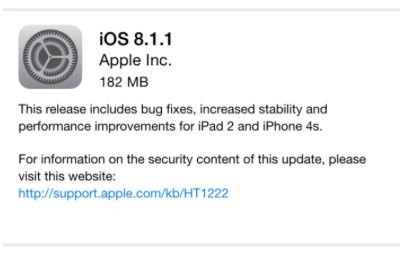
Relief is at hand, at last, for iPad2 users who have suffered through two months of sluggish, under-performing, and perpetually stalling tablets since installing September, 2014’s iOS 8 update.
Apple has this week released iOS 8.1.1, an operating system update that magically restores speed and luster to its older mobile devices, including the iPad 2 and the iPhone 4.
After installing the update Wednesday morning, I noted my iPad 2’s immediate resurrection to useful and pleasing life. Its performance has returned to its pre-iOS 8 level, which was always pretty good – good enough for me to resist the temptation of any of the more recent iPad incarnations.
Numerous media reports confirm across-the-board improvement in mobile performance on older devices after installation of this update (see: Apple Releases iOS 8.1.1, It’s An Essential Update, from Forbes, for example).
iOS 8.1.1 therefore gets an unreserved two thumbs up.
Today’s Tip: If you have been having issues with your older Apple devices since installing iOS 8 or 8.1, this new update will solve your problems. Install it, with all due haste!
– Garry J. Wise, Toronto (@wiselaw on Twitter)
Analogies
The legal research process has some basic rules. I have often articulated the analysis part of the legal research process as this:
- Your job is to answer a question
- Filter your analysis through the potential avenues of Tort, Contract, Equity, Unjust enrichment
- Make sure you look at the “bad for your client” materials and include them
- If you can’t find anything on point, make an analogy
Today’s Tip is about analogies.
How do you make an analogy? Brainstorm (alone or with a team), use a thesaurus to spark ideas, think about your past work (at the heart of it, isn’t this issue a bit like…), ask yourself what the opposite of your client’s desired outcome is and frame your research from that perspective, get creative with your legal reasoning.
Analogy is an important tool for legal reasoning. As Professor Lloyd Weinreb states in his text, Legal Reason, The Use of Analogy in Legal Argument (Cambridge University Press, 2004):
There is something distinctive about legal reasoning, which is its reliance on analogy. Leaving more precise definition for later, an analogical argument can be described as reasoning by example: finding the solution to a problem by reference to another similar problem and its solution.
Dragon Dictate & Dragon for the Mac
♫ It doesn’t have to be like this
All we need to do is make sure we keep talking…♫
Lyrics and music by: David Gilmour, Richard Wright and Polly Samson, recorded by Pink Floyd.

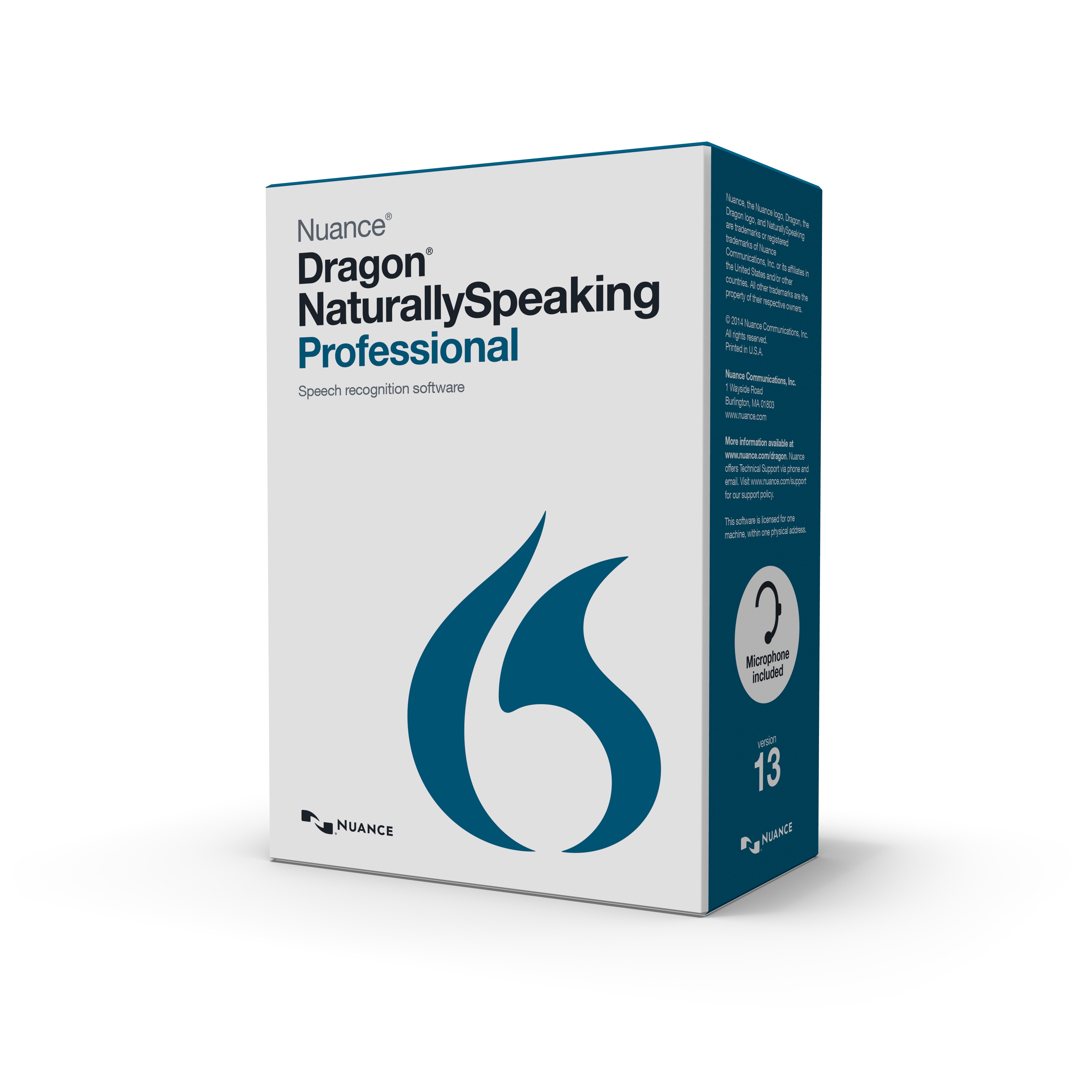

Garry’s last post inspired me to write about using dictation on both PCs and Macs. I have been a long-standing fan of voice recognition and the latest versions are even much better than earlier versions. While there is voice recognition built into the Windows operating system, I haven’t seen it used in practice. Rather, I have found that people use DragonDictate for the PC, currently at version 13; or on the Mac, you can use either Dragon for the Mac, Version 4 or use the Dictation & Speech capabilities built into Yosemite. The best thing about the latest version of dictation in Yosemite is that you can download a file and use dictation what are you are on or off-line. This is a significant advantage over prior versions. It’s a matter fact that this column was “written”, if you can call it that, using Yosemite’s dictation capabilities. Another improvement in dictation in Yosemite is that you can use continuous dictation. Prior versions meant that you could only dictate up to the size of the buffer.
It is amazing how easy it is to use and I am referring to both Dragon Dictate for the PC as well as Dictation in Yosemite. I work on both platforms and use voice recognition on both.
Garry noted that he does most of his work either on an iPad or Microsoft Surface and barely touches his keyboard. I have to say my experience is much the same (except that I prefer laptops over tablets) and I agree that I am much faster using voice recognition than I am typing. Furthermore, voice recognition never misspells; but it could substitute a synonym or possibly a word recognized in error, in which case you still have to proofread your work. But it is literally amazing to to talk to your computer and see your text appear, correctly transcribed and formatted, on the screen.
Now DragonDictate for the PC is much more fully developed then Dictation for the Mac that is part of the OS. However, if all you need is dictation plus some formatting, then dictation for the Mac maybe just fine. I have written extensive papers for conferences using just dictation for the Mac. Why don’t I use DragonDictate for the Mac? Unfortunately, the versions of Dragon that I have, namely versions 2 and 3, are incompatible with Yosemite. I may upgrade but for the moment I’m happy with Dictation in Yosemite.
PC users would be delighted with all the additional commands that you get with Dragon for the PC. You can literally browse the web, save your work, apply detailed formatting and do much more by voice commands.
When it comes to interfacing with your computer it doesn’t have to come to just using a keyboard. All we have to do is make sure we keep talking…
-David J. Bilinsky, Vancouver.


